For people who do not exercise regularly, eccentric movement can be a useful way to build strength, control, and confidence.
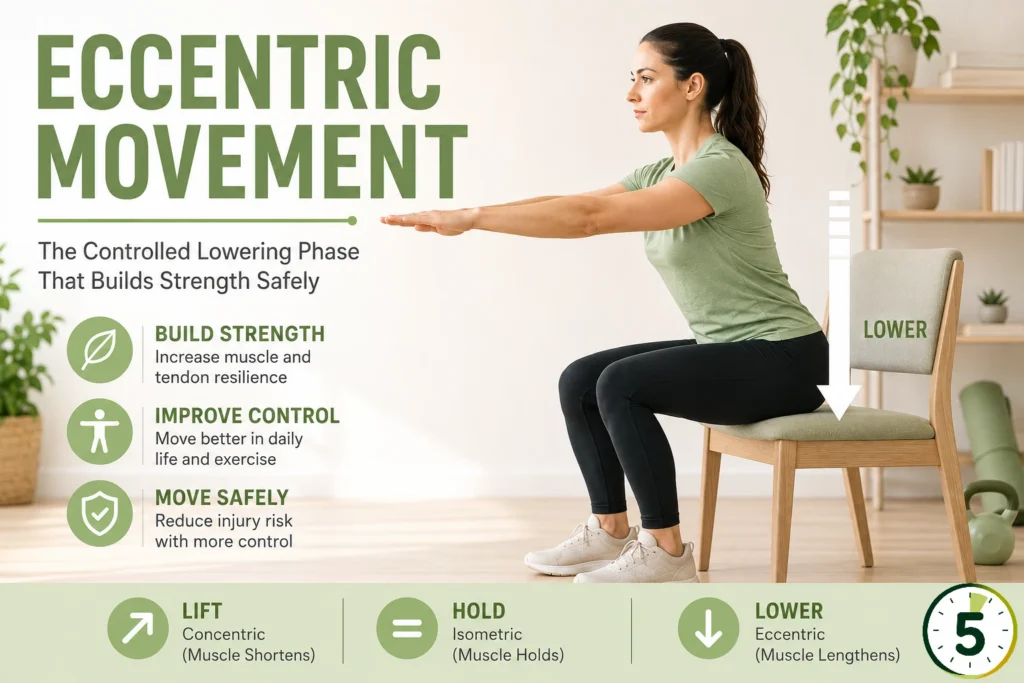
Eccentric movement is the “lowering” or “lengthening” part of an exercise. It happens when a muscle is working while it gets longer. For example, when you slowly lower yourself into a chair, walk downstairs, lower a dumbbell after a curl, or control your body on the way down during a squat, you are doing eccentric movement.
But it also needs to be introduced carefully because it can cause more next-day soreness than many people expect. High-intensity eccentric exercise is linked with muscle damage and delayed-onset muscle soreness, especially when the movement is new or too hard too soon.
The good news is that gradually increasing intensity and volume can reduce that risk.
What Does “Eccentric” Mean in Exercise?
Most strength exercises have three parts:
Concentric: the muscle shortens.
Example: standing up from a squat or lifting a dumbbell in a biceps curl.
Eccentric: the muscle lengthens while still controlling the movement.
Example: lowering into a squat or lowering the dumbbell back down.
Isometric: the muscle works without visibly changing length.
Example: holding a wall sit or pausing halfway through a squat.
A simple way to remember it: eccentric movement is usually the part where you resist gravity.
In a push-up, the eccentric phase is lowering your chest toward the floor. In a step-down, it is controlling your body as one foot lowers toward the ground. In a deadlift, it is lowering the weight back down with control.
Why Eccentric Movement Matters
Eccentric movement is important because real life is full of “lowering” actions. Sitting down, going downstairs, lowering groceries, stepping off a curb, and catching yourself when you stumble all require eccentric strength.
For beginners, this matters a lot. Many people think fitness is only about lifting, pushing, or moving faster. But the ability to slow your body down is just as important. Better control during lowering movements can help you move with more confidence and may support stronger muscles and tendons over time. Cleveland Clinic describes eccentric training as useful for muscle control, tendon strength, and handling load during movement.
Eccentric exercise is also commonly used in rehabilitation settings, especially for certain tendon and muscle problems, though therapeutic use should be guided by a qualified clinician. Ohio State University notes that eccentric training has been used in injury rehabilitation and tendon management, but recommends consulting a medical provider before using it therapeutically.
Common Examples of Eccentric Movement
You may already do eccentric movements every day without realizing it.
When you lower yourself into a chair, your quadriceps and glutes help control the descent. When you walk downhill or downstairs, your leg muscles work to brake your body. When you lower a laundry basket to the floor, your arms, shoulders, back, and legs help manage the load.
In exercise, common eccentric movements include:
Squat: lowering toward the floor.
Push-up: lowering your chest toward the ground or wall.
Biceps curl: lowering the weight after curling it up.
Calf raise: lowering your heels after rising onto your toes.
Step-down: slowly lowering one foot from a step.
Glute bridge: lowering your hips back to the floor.
Row: letting the weight or band return slowly.
The key word is control. Dropping quickly is not the same as training the eccentric phase. Eccentric movement means you are actively slowing the motion.
Benefits for Beginners
Eccentric movement can help beginners in several ways.
First, it teaches control. Moving slowly gives you time to notice your posture, balance, and joint position. This can make exercises feel less chaotic and more manageable.
Second, it can build strength with relatively simple movements. You do not need fancy equipment to practice lowering slowly into a chair, doing a wall push-up, or lowering your heels from a calf raise.
Third, it may help you feel more capable in daily life. If getting out of a chair, going downstairs, or carrying objects feels hard, improving controlled lowering strength may make those tasks feel easier.
Fourth, eccentric training can be effective even when it feels less breathless than other types of exercise. Research has shown that eccentric contractions can produce high force with lower metabolic cost than concentric contractions, which is one reason eccentric training is studied for different populations.
That does not mean it is “easy” or risk-free. It means the effort may feel different. You may not feel exhausted during the workout, but you might feel sore one or two days later.
The Main Risk: Too Much Soreness
Eccentric exercise is famous for causing delayed-onset muscle soreness, often called DOMS. DOMS usually appears hours after exercise and may peak a day or two later, especially after unfamiliar movements. Eccentric contractions are strongly associated with this type of soreness.
Some mild soreness can be normal when you start exercising. But severe soreness is not a badge of honor. It can make you move poorly, skip workouts, or feel discouraged.
For beginners, the goal is not to destroy your muscles. The goal is to practice enough to improve, then recover well enough to repeat it.
A good rule: after a beginner eccentric workout, you should feel like you could do it again within a couple of days. If you are limping, struggling with stairs, or sore for most of the week, the workout was too much.
How to Start Safely
Start with bodyweight movements and slow them down slightly. You do not need to do extreme “negative reps” or heavy weights.
A beginner-friendly tempo is:
Lower for 2 to 3 seconds. Pause briefly. Return normally.
For example, when doing a chair squat, take 2 to 3 seconds to sit down. Then stand back up at a comfortable speed. That is enough.
Do not start with very slow 10-second lowering phases, heavy weights, or high repetitions. Those methods can be useful for trained people, but they are often too much for beginners.
ACSM notes that muscle damage risk from high-intensity eccentric contractions can be reduced by starting with light-intensity eccentric contractions and gradually increasing intensity and volume.
Beginner Eccentric Workout
Try this simple routine 2 days per week, with at least one rest day between sessions.
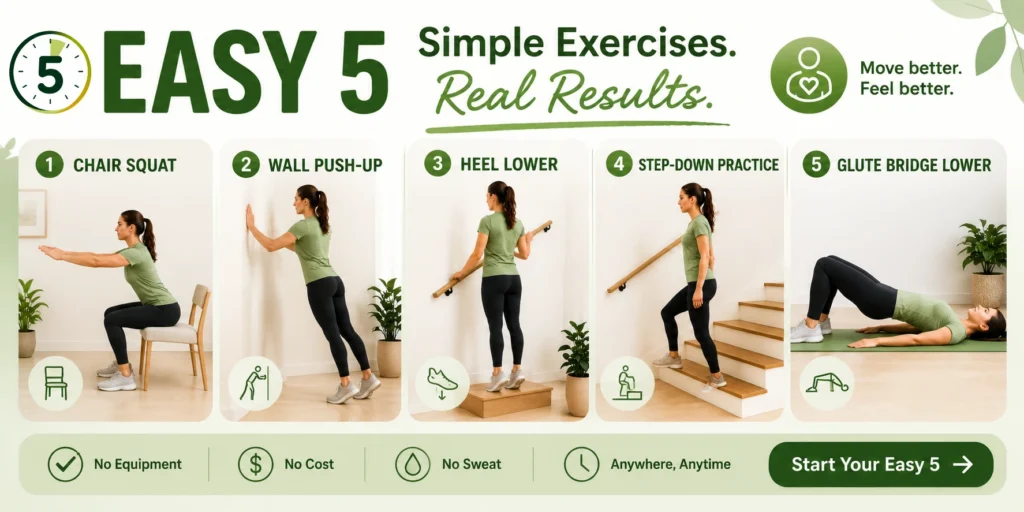
1. Chair Squat
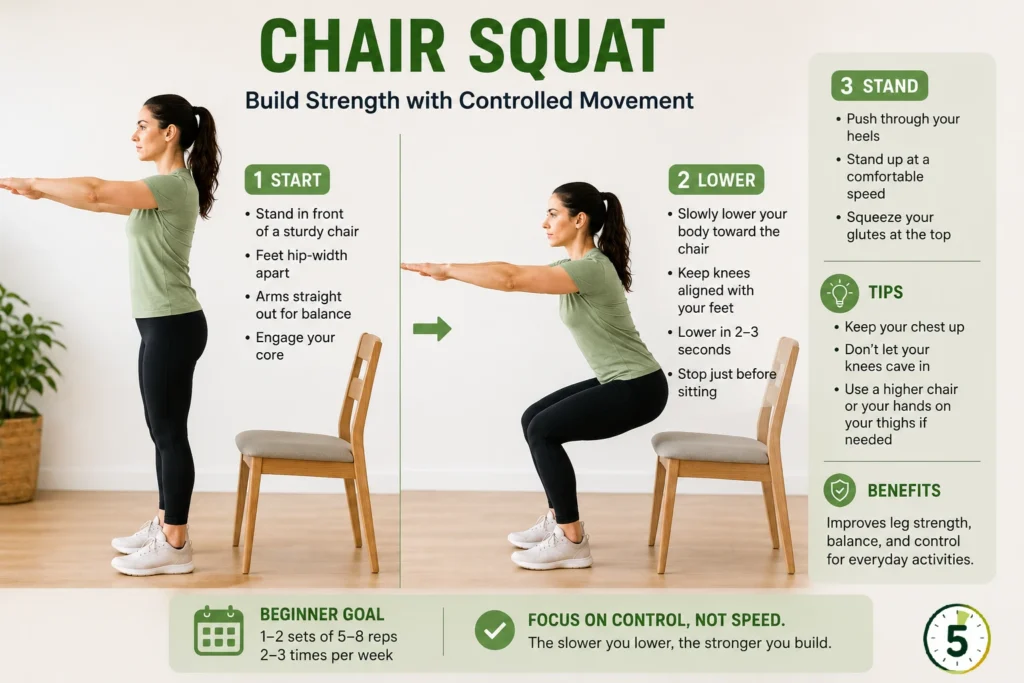
Stand in front of a sturdy chair. Keep your feet about hip-width apart. Slowly lower yourself into the chair for 2 to 3 seconds. Stand back up normally.
Do 1 to 2 sets of 5 to 8 repetitions.
Make it easier by using your hands on your thighs or chair arms. Make it harder by using a lower chair or doing more repetitions later.
2. Wall Push-Up
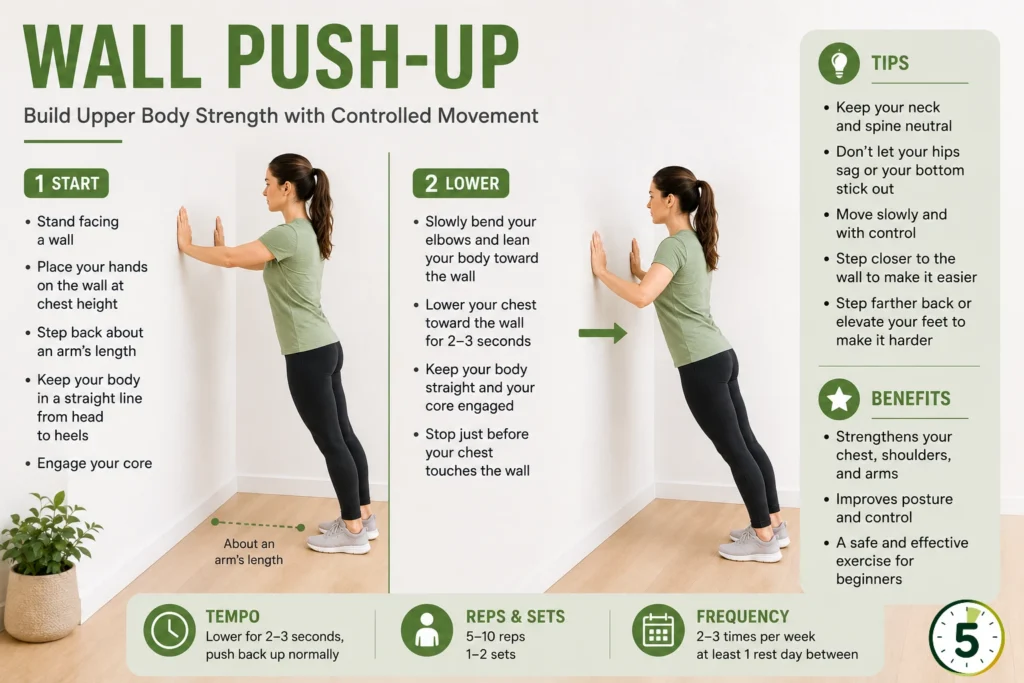
Stand facing a wall. Place your hands on the wall at chest height. Slowly bend your elbows and bring your chest toward the wall for 2 to 3 seconds. Push back to the start.
Do 1 to 2 sets of 5 to 10 repetitions.
Keep your body in a straight line. Do not let your head jut forward.
3. Heel Lower
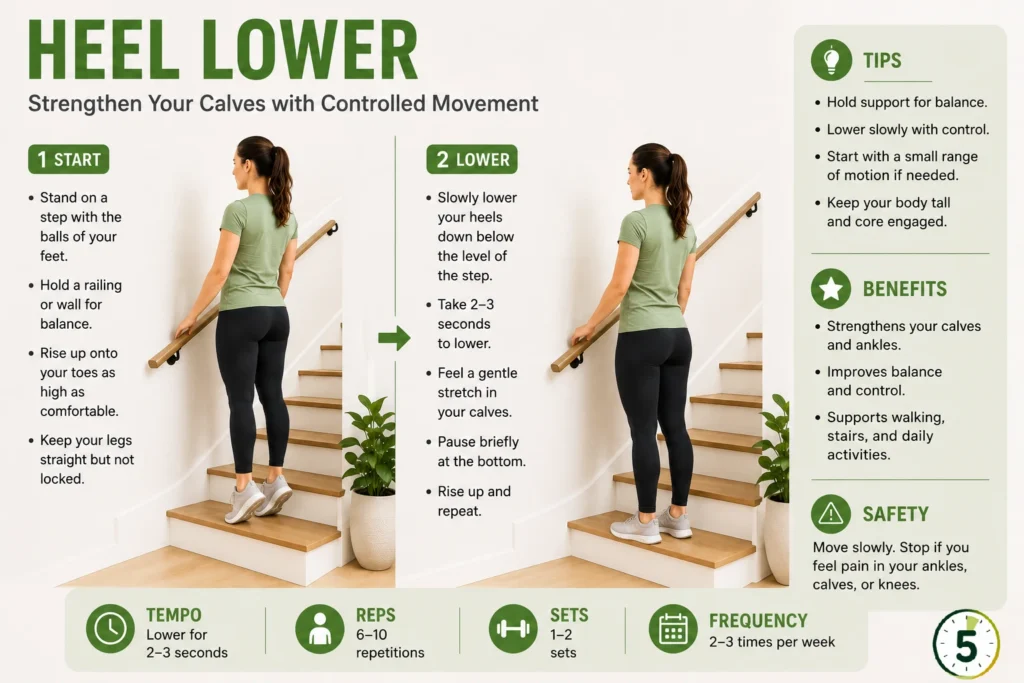
Stand near a counter or wall for balance. Rise onto your toes with both feet. Slowly lower your heels back down for 2 to 3 seconds.
Do 1 to 2 sets of 6 to 10 repetitions.
This strengthens the calves and helps with ankle control. Hold support the entire time if balance is difficult.
4. Step-Down Practice
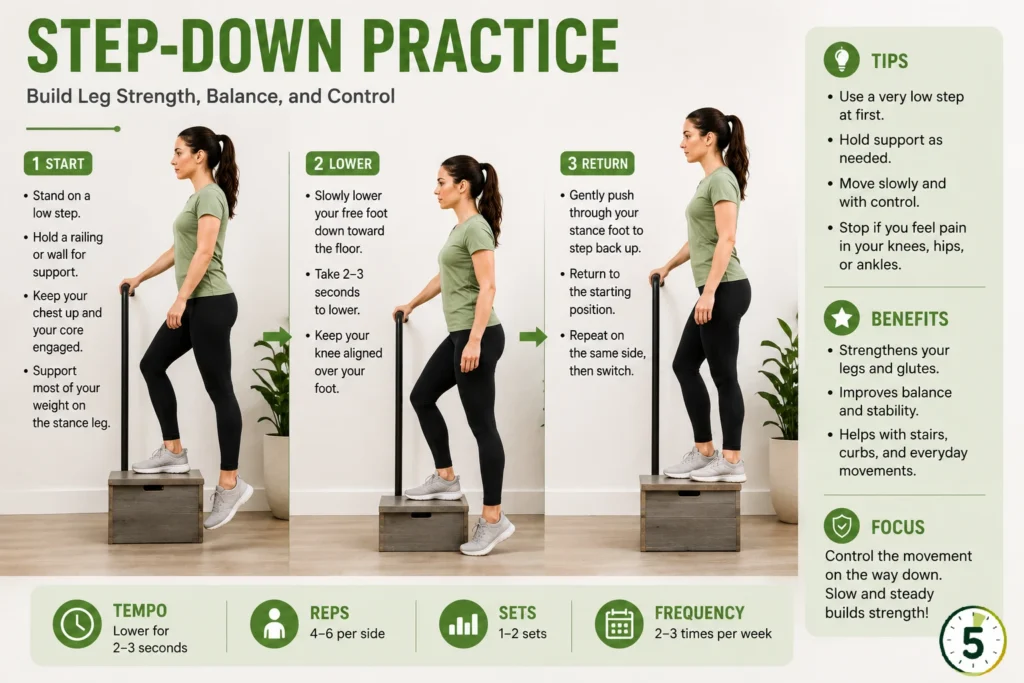
Stand on a low step. Hold a railing or wall. Slowly lower one foot toward the floor for 2 to 3 seconds, then return to the step.
Do 1 set of 4 to 6 repetitions per side.
Use a very low step at first. This exercise can create soreness, so keep the first session easy.
5. Glute Bridge Lower
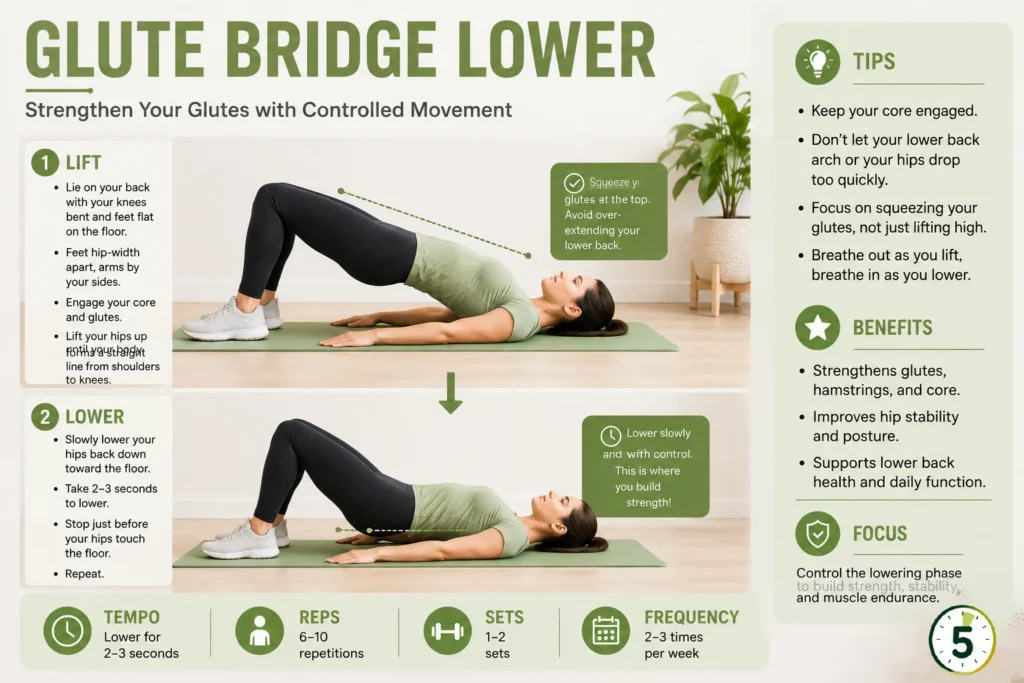
Lie on your back with knees bent and feet flat. Lift your hips into a bridge. Slowly lower your hips back to the floor for 2 to 3 seconds.
Do 1 to 2 sets of 6 to 10 repetitions.
Stop if you feel back pain. The work should mainly be in the glutes and backs of the legs.
How Often Should Beginners Do Eccentric Training?
For most beginners, 2 days per week is enough at first. The American College of Sports Medicine recommends resistance training 2 to 3 days per week for novice training.
You do not need a separate “eccentric day.” Instead, add controlled lowering to simple exercises you already do.
For example:
Monday: chair squats, wall push-ups, heel lowers
Thursday: repeat the same routine
Other days: walking, gentle mobility, or rest
Consistency matters more than intensity. A small routine repeated for several weeks is better than one brutal workout that leaves you sore and discouraged.
Safety Tips
Warm up first. A 5-minute walk around the house, easy marching, or gentle arm circles can help your body feel ready.
Move slowly, but not painfully. Eccentric movement should feel controlled, not sharp or alarming.
Use support. A wall, counter, railing, or chair can make the movement safer.
Start with fewer reps than you think you can do. The soreness often shows up later, not during the workout.
Avoid heavy eccentric training at first. Heavy “negative reps” are not beginner exercises.
Give muscles time to recover. Avoid training the same sore muscles hard on back-to-back days.
Pay attention to warning signs. Stop and seek medical guidance if you feel sharp pain, joint pain, chest pain, dizziness, unusual swelling, severe weakness, or dark urine after exercise.
People with heart disease, uncontrolled high blood pressure, major joint problems, recent surgery, balance issues, or a history of serious injury should ask a healthcare professional before starting a new strength routine.
Eccentric Movement vs. Concentric Movement
You do not need to choose one forever. A complete exercise program usually includes both.
Concentric movement helps you lift, rise, push, and climb. Eccentric movement helps you lower, land, brake, and control.
Think of standing up from a chair. The standing part is concentric. The sitting-down part is eccentric. Both matter. But many beginners rush the lowering phase, which means they miss a chance to build control.
A simple upgrade is to slow down the lowering part of everyday movements. Sit down with control. Lower objects carefully. Step down slowly. That is eccentric training in real life.
Who Should Be Careful?
Eccentric movement is not automatically dangerous, but some people should be extra cautious.
Be careful if you are very inactive, recovering from injury, dealing with tendon pain, or returning after illness. Be especially careful with downhill walking, stairs, deep squats, and heavy weights, because these can create a lot of eccentric load.
Older adults can benefit from strength training, but safety and progression matter. Start with supported, low-intensity movements and avoid rushing.
For tendon problems, do not guess. Eccentric exercises are often discussed for tendon rehab, but the right movement, dose, and timing depend on the condition. Work with a physical therapist or qualified healthcare professional.
Simple Progression Plan
Use this 4-week approach:
Week 1: Choose 2 or 3 exercises. Do 1 set each. Lower for 2 seconds.
Week 2: Add a few repetitions, but keep the same exercises.
Week 3: Add a second set to one or two exercises.
Week 4: Lower for 3 seconds or add a slightly harder variation.
Only progress when soreness is mild and your form feels steady.
Build Strength, Body Control, and Confidence
Eccentric movement is the controlled lowering phase of exercise. It helps you build strength, body control, and confidence for daily activities like sitting, stepping down, and carrying objects.
For beginners, the safest approach is simple: start light, lower slowly, use support, and progress gradually. You do not need heavy weights or extreme soreness to benefit. In fact, the best eccentric training for someone getting back into exercise is usually calm, controlled, and repeatable.
A good first goal is not to feel crushed after your workout. It is to finish feeling successful — and ready to come back again.